Daily Nutrition · Seasonal Cooking
What the Rhythm of Seasonal Eating Has Taught a Busy London Kitchen
Beatrice Marsden
·
 Harriet Caldwell
Fermented grains, slow-cooked legumes, and the considered arrangement of a weekly shop: these are the recurring gestures of a kitchen that has oriented itself around the longer view. Not the view of a single meal, or even a single week, but the view of a practice sustained over months — a practice in which the digestive system, the weekly rhythm of cooking, and the structure of the kitchen's pantry all come into a kind of alignment. These are notes from four months of deliberate whole-food cooking in a London kitchen, and what that attentiveness actually produced.
The phrase "whole foods" has accumulated a considerable weight of marketing association. In the context of this field note, the term is used in its more precise sense: foods that have undergone minimal processing between their origin and the kitchen. Dried legumes rather than tinned. Whole grains rather than refined flour. Vegetables purchased at market rather than prepared in advance. The distinctions are not absolute — a tinned tomato is still a whole food in the relevant sense — but the general direction is toward ingredients that retain the fibre, compound, and structural complexity they possessed before industrial handling.
The practical difference between a kitchen organised around whole foods and one organised around convenience products is most apparent in the rhythm of the week's cooking. Whole foods require more time — dried chickpeas need overnight soaking, whole barley needs an hour of simmering — but they also require less management. A pot of legumes cooking on a low flame asks for less intervention than a complex assembled dish. The kitchen that has learned to absorb this longer preparation rhythm finds it, after several weeks, unremarkable.
For a kitchen also interested in gut-friendly recipes, the whole foods orientation provides structural support. The diversity of fibres present in whole grains and legumes is considerably greater than that in their processed equivalents. Nutritionist guidance on gut-friendly eating routinely emphasises diversity of plant sources as the primary lever available to a non-specialist kitchen. Whole food cooking addresses this diversity as a consequence of the ingredients themselves, not as a separate nutritional project.

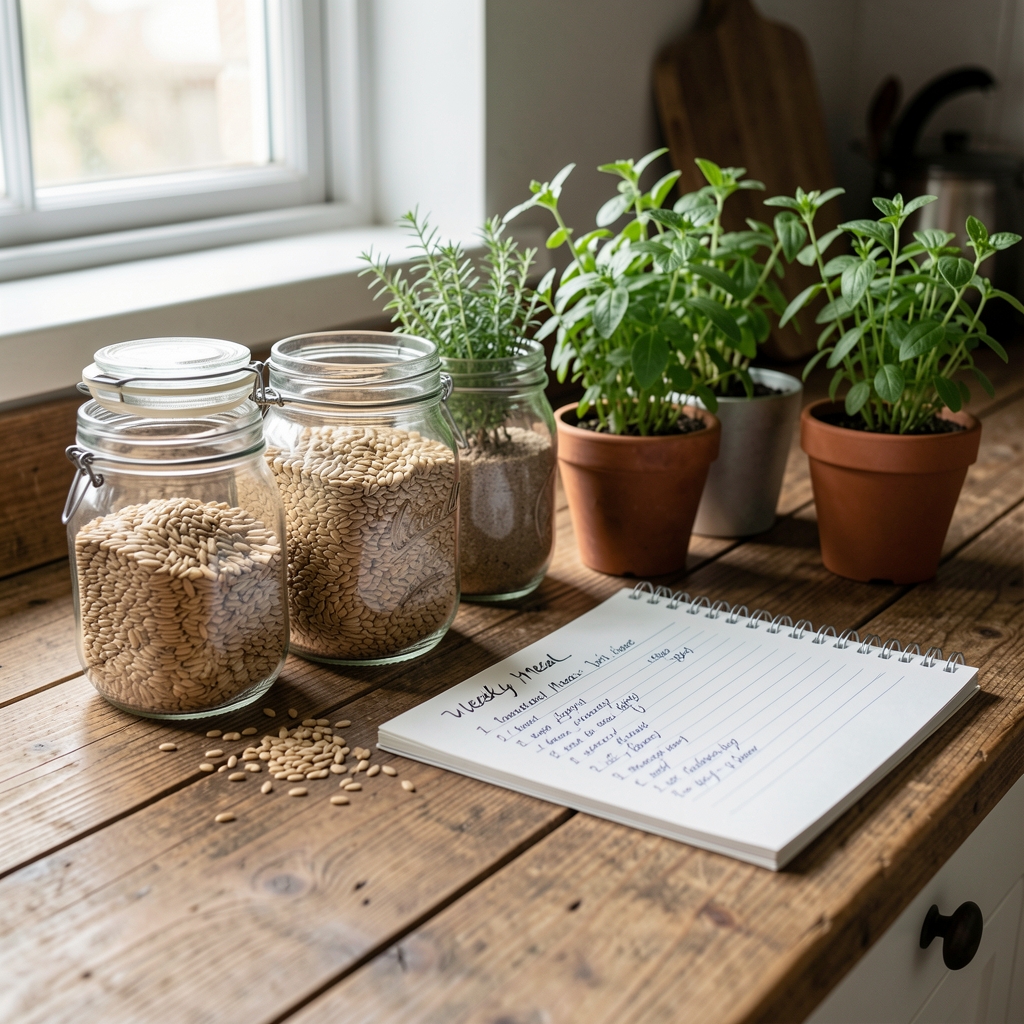
Meal planning in a whole-food kitchen begins not at the meal but at the shop. The weekly arrangement of ingredients — what is bought, in what quantities, with what preparation in mind — determines the shape of the week's eating more reliably than any recipe followed on a given evening. A shop that includes three varieties of dried legume, two whole grains, a range of seasonal vegetables, and a moderate quantity of animal protein will produce a week's cooking that, whatever evenings bring, retains the structural properties of a balanced, gut-friendly approach.
The weekly shop, regarded as a deliberate practice rather than an errand, also creates a moment of reflection on the week ahead. How many evenings are genuinely available for cooking? Which nights are likely to be late and will require a pre-prepared component? The kitchen that has a batch of cooked lentils in the refrigerator and a jar of fermented vegetables on the shelf can construct a reasonable meal in fifteen minutes on the nights when time is limited, without departing from the whole-food framework.
This pre-prepared component — the batch cooked grain, the slow-cooked legume, the fermented staple — is the practical mechanism through which a whole-food kitchen remains viable across a working week. It requires a shift in the unit of planning from the individual meal to the week as a whole. The hour spent on a Sunday afternoon preparing components is not cooking for that afternoon — it is distributing effort across the week.
"The whole-food kitchen does not ask for more time. It asks for time differently arranged — concentrated at one point in the week so that it can be absent at others."
Among the recurring elements of gut-friendly cooking in published nutrition research, fermented foods occupy a notable position. The argument is not complex: fermented vegetables, grains, and dairy products contain live microbial cultures that interact with the digestive environment in ways that plain cooked food does not. The published evidence for this interaction is substantial enough that it appears consistently in mainstream nutrition guidance, not as a specialist recommendation but as a broadly applicable observation about diet diversity.
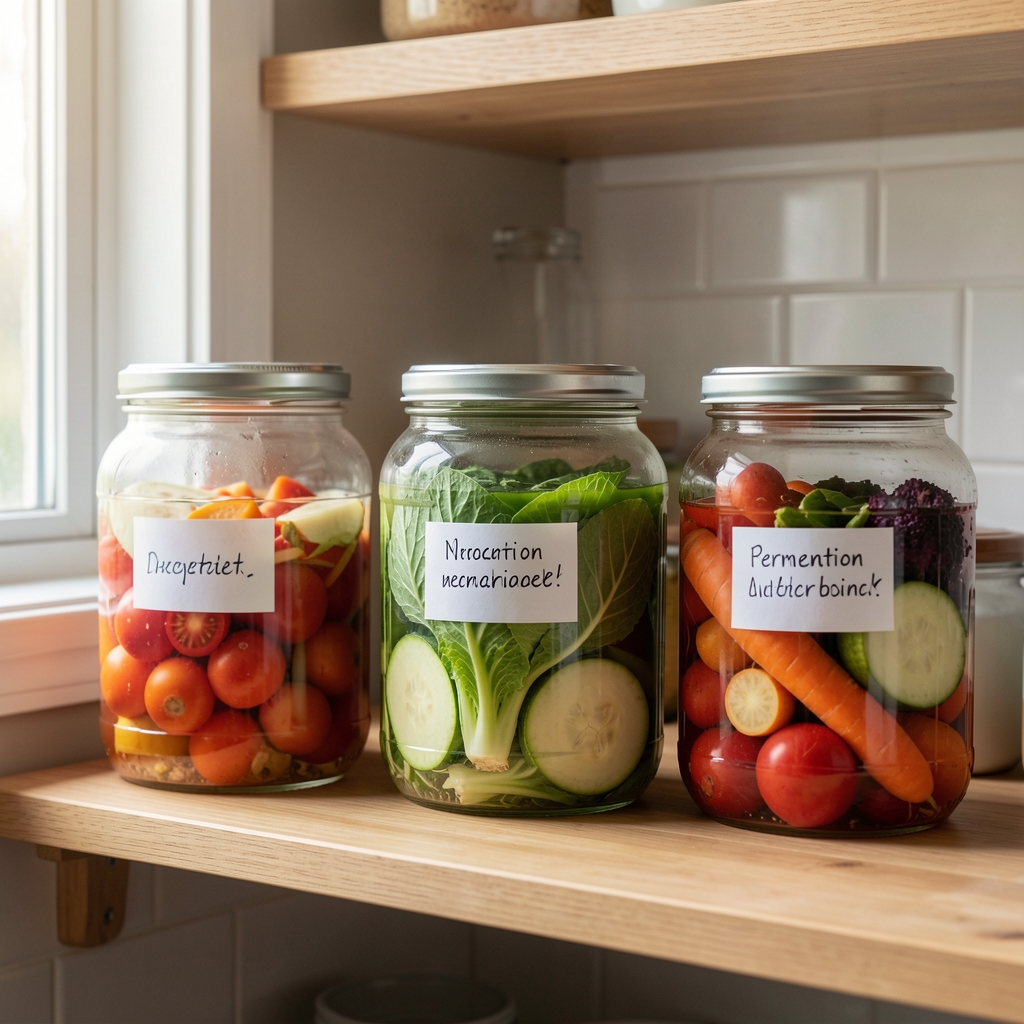
The practical integration of fermented foods into a working kitchen does not require a specialist setup. A jar of kimchi or sauerkraut, bought or made, kept in the refrigerator and added to meals in small quantities, provides a regular fermented component without any particular effort. A batch of yoghurt, fermented at room temperature overnight, offers another. The quantity required for the intended effect is small — a few tablespoons added to a grain bowl, a spoonful alongside a legume dish — and the integration into the week's cooking is a matter of habit rather than programme.
The fermentation habit, once established, also generates a useful surplus economy in the kitchen. The end of a cabbage becomes a starting point rather than a remnant. The liquid from a jar of fermented vegetables flavours a dressing. The sourdough starter on the shelf provides a weekly loaf that contributes its own fermented grain element to the week's eating. Each of these is a small, recurring act that accumulates over months into a different kind of kitchen — one where the connections between ingredients, across time and preparation, are more visible.
A whole-food kitchen organised around gut-friendly principles will, as a structural consequence, consume more vegetables and fruits than one organised around convenience products. This is not an imposed requirement but a natural outcome of the ingredient logic: when the building blocks of a week's cooking are whole plant foods, the resulting meals are predominantly plant-based in their composition.
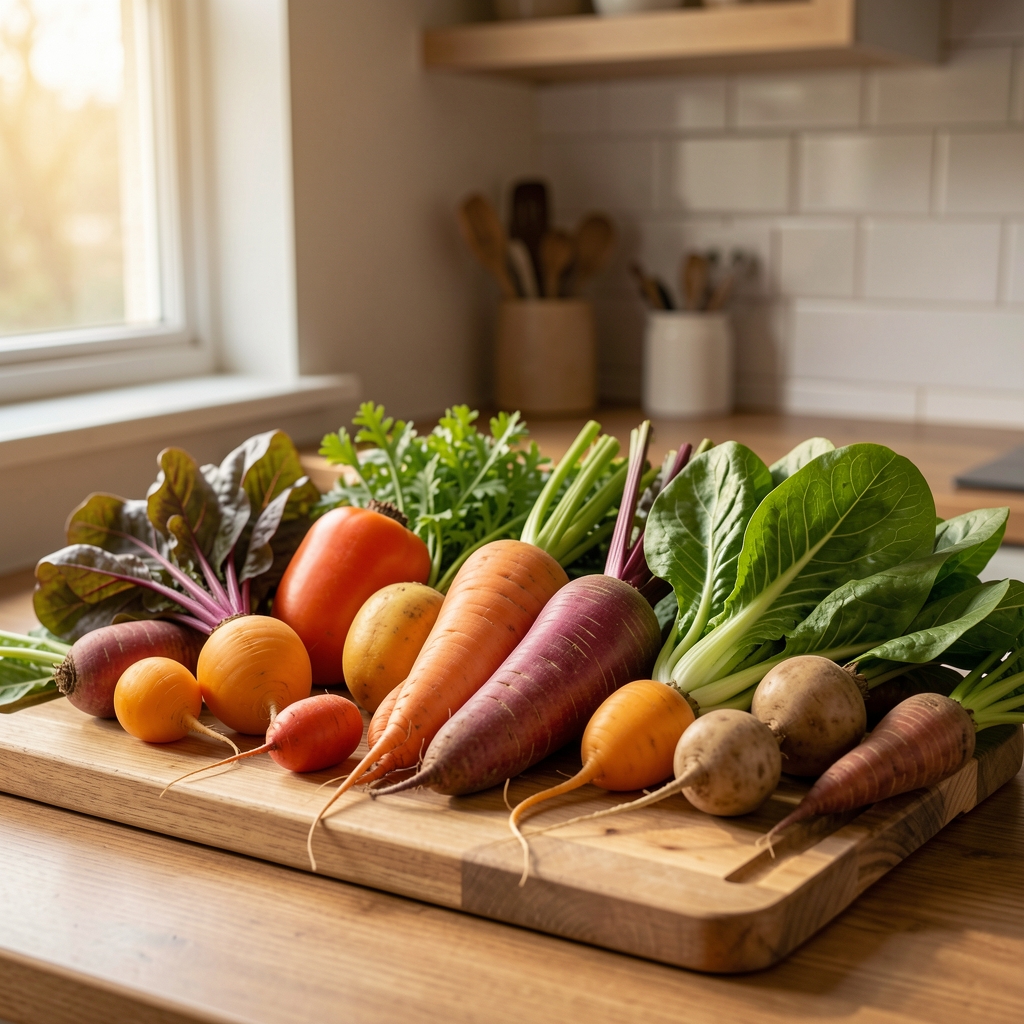
Seasonal vegetables are particularly well-suited to this framework because their variety rotates across the year, providing the diversity of plant fibre that published research identifies as relevant to gut-friendly eating. A kitchen that follows the market's seasonal rotation will, without any particular intention, eat differently across the four seasons — a structural variety that a kitchen organised around the same convenience staples will not experience.
Fruit, often underrepresented in the British kitchen relative to vegetables, finds a natural place in the whole-food week as a breakfast component, a mid-meal item, or a component in fermented preparations. The contribution of seasonal fruit to the week's plant diversity is significant — berries, stone fruits, and orchard fruits each introduce different fibre structures and flavour compounds that expand the dietary range without any additional cooking requirement.
The four months of field notes that inform this article cover a period from December 2025 through March 2026 — a stretch that spans winter market produce, the last of the root vegetables, and the first signs of spring growth at the Borough and Berwick Street markets. The observations are not generalisable in any scientific sense; they are one kitchen's record of what a sustained whole-food orientation produced.
The most consistent observation across the four months was a change in the kitchen's relationship to convenience food. Not an abandonment — there were several weeks in which circumstances produced dinners assembled from ready-made components — but a shift in the default. The kitchen that begins the week with pre-cooked components and a stocked fermentation shelf reaches for whole-food preparation more readily than the one that begins empty. The environment shapes the default; the default shapes the week.
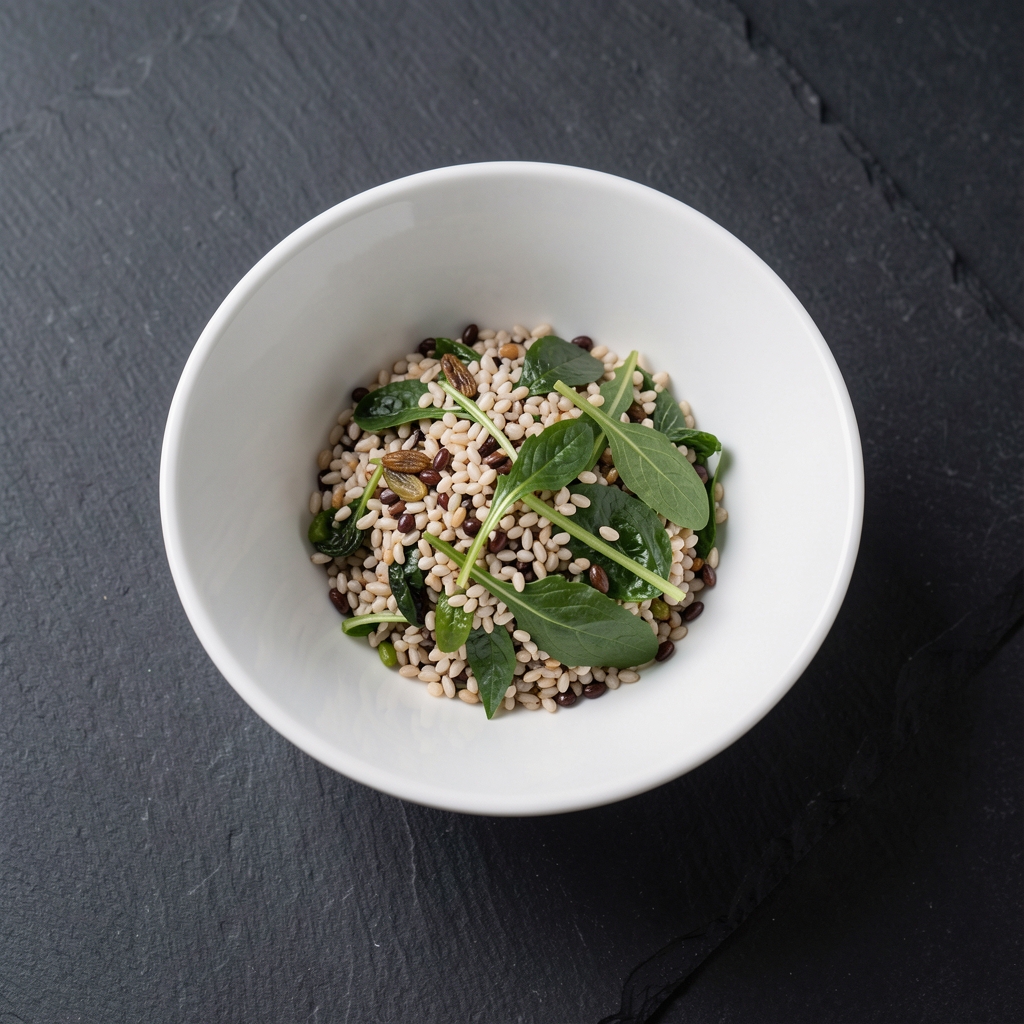
The second consistent observation was a change in the sensory range of the week's cooking. Whole-food ingredients — whole grains, slow-cooked legumes, fermented components — introduce flavour registers that processed equivalents do not have. A barley and roasted beetroot salad with a spoonful of kraut dressing tastes different from its simplified equivalent in a way that makes the simplified version seem, over time, less interesting. The palate, extended across months of varied whole-food cooking, recalibrates. This recalibration is its own kind of nutritional argument.
Harriet Caldwell is a contributing editor to Otaleven Letters with a background in food writing and editorial nutrition journalism. Her work focuses on the practical and cultural dimensions of whole-food cooking across different seasons and kitchen contexts.
More from this writer