Mindful Eating · Portion Awareness
Mapping the Quiet Art of Portion Awareness in an Age of Abundance
Tobias Ashcroft · 27 February 2026 · 9 min read
 Beatrice Marsden
There is a particular quality to the weeks when a kitchen shifts its allegiance to what the season offers. Root vegetables appear in the same corner of the market stall, week upon week, and a quiet rhythm forms around them — a cadence of preparation that does not require consulting a recipe, only attending to what is present. This is a record of one such season in a London kitchen, and what attentive, seasonal eating actually looks like across several months of ordinary life.
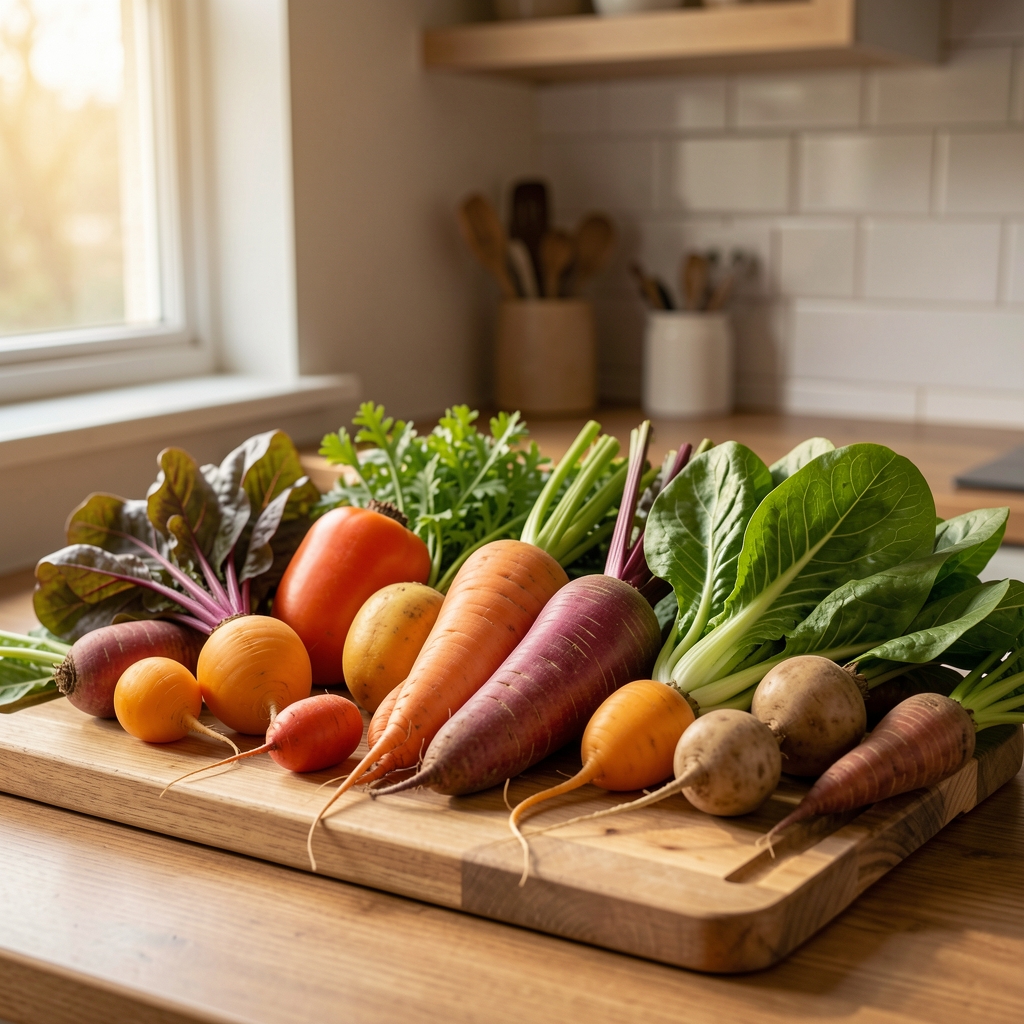
The Berwick Street market in Soho operates on a logic that has little to do with nutrition journals or the language of optimised eating. Stallholders arrive with whatever the week's supply has brought, and the selection on a Tuesday in January looks markedly different from the same Tuesday in September. For a kitchen serious about seasonal vegetables and fruits, this irregularity is not an obstacle — it is the structure of the week.
A considered approach to healthy eating habits begins, in practice, not with a fixed shopping list but with an open hand. The writer who visits the market on a Wednesday morning and walks away with three bunches of cavolo nero, a bag of parsnips and a celeriac because those are the things that arrived that week is not cooking without a plan — they are deferring the plan to the season itself. This is a meaningful distinction.
Diet and nutrition writing frequently addresses the question of what to eat in the abstract. Seasonal cooking moves the question into the concrete: what is available this week, in this place, at this quality? The answer changes the kitchen's habits without requiring any particular programme to be followed.
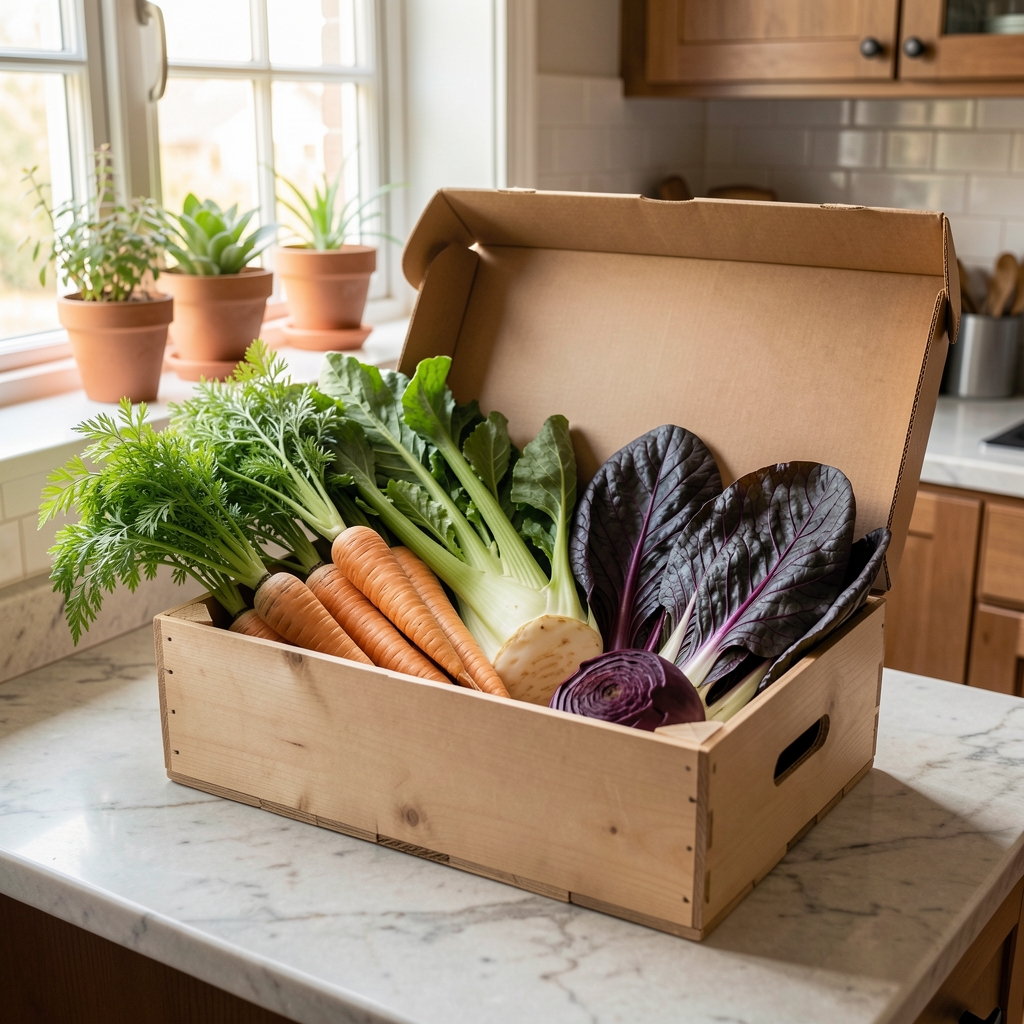
When a meal is built around a seasonal vegetable rather than around a protein centrepiece, the proportions of the plate shift. The nutritional logic that follows from this shift is not incidental. Fibre-rich root vegetables, brassicas with their array of compounds, and properly prepared legumes form the material basis of a balanced meal without requiring any particular intervention — they arrive in balance when the starting point is the vegetable.
Nutritionist guidance on balanced meals commonly describes the plate in terms of ratios: half vegetables, a quarter whole grains, a quarter protein-rich food. This model is useful as a structural reminder. In practice, the kitchen that builds around seasonal vegetables arrives at something close to this ratio naturally, because the vegetable dictates volume. A celeriac roasted whole is substantial; a parsnip purée alongside a modest portion of grain creates its own equilibrium without calculation.
This is not an argument against structured meal planning. It is an observation that the two approaches — the planned and the seasonal — are not incompatible. The weekly rhythm of whole foods and seasonal produce can be integrated with a deliberate structure for the rest of the week's cooking, and the result is a kitchen that is more attentive, not less organised.
"The kitchen that builds around what the week has brought is not a disorganised kitchen. It is a kitchen that has learned to read a different kind of schedule — one written by the land rather than by the month planner."
The connection between seasonal eating and weight management is rarely made explicit in mainstream nutrition coverage. Yet it operates through a straightforward mechanism: seasonal vegetables are, by their nature, dense in water content and fibre and relatively low in processed carbohydrates. A kitchen organised around them will naturally produce meals with a different energy profile from one organised around shelf-stable processed ingredients.
This is not a claim about any particular outcome for any individual reader. It is an observation about the structural properties of a seasonal kitchen. Writers covering everyday nutrition have noted this pattern repeatedly — that the communities with the strongest traditions of seasonal, vegetable-centred cooking tend, as a group, to have more stable relationships with portion sizes and meal structure. The causal story is complex, but the pattern is consistent and worth noting.
What seasonal cooking offers, in practical terms, is a reset of the default. When the default changes from a shelf-stable roster of ingredients to a weekly market selection, the kitchen's habits shift — slowly, in aggregate, without requiring a programme or a declared change of approach. The shift is the practice.
A kitchen oriented towards an active lifestyle faces a specific challenge: the energy requirements of regular exercise often push towards volume eating, which can conflict with the considered, smaller-scale approach of seasonal cooking. The resolution lies in whole foods. Legumes, whole grains, eggs from known sources, oily fish in season — these are the foods that bridge the gap between the vegetable-centred seasonal approach and the calorific requirements of a genuinely active week.
Meal planning for an active lifestyle within a seasonal framework requires one additional layer of intention: protein planning within a predominantly vegetable framework. The weekly shop that includes a reliable protein source — dried lentils, a bag of dried chickpeas, a piece of fish from the market on Thursday — gives the seasonal kitchen its nutritional completeness without departing from the underlying logic.

Among the recurring observations in recent nutrition writing is the relationship between gut-friendly recipes and the diversity of vegetables consumed in a given week. The current published understanding of gut-friendly eating emphasises variety: a broader range of vegetable types, prepared in different ways, produces a different environment in the digestive system than a narrower roster of the same ingredients week after week.
Seasonal eating, by its nature, enforces variety. The kitchen that cannot obtain the same four vegetables every week because one of them is out of season is a kitchen that is, inadvertently, rotating its diet. Coupled with a modest fermentation habit — a jar of kimchi, a weekly batch of yoghurt, a pickled vegetable from last month's surplus — the seasonal kitchen arrives at something close to the gut-friendly approach recommended in published research without regarding it as a separate project.
The fermentation habit itself is one of the more manageable entry points into a more considered everyday nutrition practice. It requires a small investment of time and attention — a few minutes on a Sunday, a clean jar, the end of a cabbage. The result, repeated weekly, becomes part of the kitchen's cadence and can be regarded as routine rather than as an exceptional effort.
Mindful eating is a phrase that has accrued a certain amount of marketing language, which can obscure what it describes: paying attention to the meal in front of you. Within a seasonal kitchen, this attention is, in some ways, built in. When a meal has been constructed from ingredients that arrived this week, from a stall that will carry different things next Tuesday, the act of eating it carries an implicit awareness of its temporariness. This is not a mystical observation — it is a description of the relationship between procurement and attention.
The kitchen that eats mindfully is one that has created conditions for attention. It has not brought the phone to the table, has not prepared the meal in ten minutes from a shelf of identical ingredients, has not eaten in transit. The seasonal kitchen, by adding a layer of intention to the procurement process, creates conditions for this attention more readily than one that has eliminated all variability from its roster of ingredients.
This is the final observation from a season of seasonal cooking in a London kitchen: the practice produces attention as a side effect. It does not require it as a starting condition. The attention follows from the practice, week by week, as the kitchen learns what the season has to offer and what to do with it when it arrives.